

Introduction
An anterior cruciate ligament (ACL) tear is the most common and debilitating knee injuries in athletes and active adults. As a knee and sports surgeon practising in Goa, I see patients whose careers, hobbies and daily lives are disrupted by instability, pain and the risk of further knee damage. In many cases, an arthroscopic (keyhole) ACL reconstruction restores stability, reduces the risk of secondary meniscal and cartilage damage, and allows a safe return to sport and everyday activities. Here we explain when ACL surgery is necessary, how safe and minimally invasive arthroscopic ACL reconstruction is, common causes of ACL injury, what to expect during recovery.
What is the ACL and why does it matter?
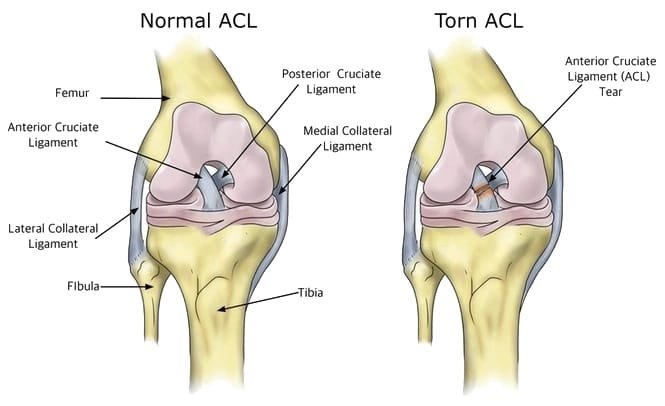
The anterior cruciate ligament (ACL) is a major stabiliser inside the knee that prevents excessive forward translation and rotation of the leg bone(tibia) over the thigh bone(femur).
Injury to the ACL causes instability (sensation of “giving away”), pain, swelling and often prevents return to pivoting sports.
An unstable knee increases the risk of meniscal tears and early knee arthritis if not managed in a timely and appropriate manner.
When is ACL surgery necessary?
Surgery is commonly recommended when:
- You have a complete ACL tear with symptomatic instability (repeated “giving way”) that limits normal activity and sports.
- You are young or physically active and want to return to pivoting sports (football, cricket, badminton, basketball, skiing, etc.).
- There is associated knee damage such as meniscal tears that require repair, stabilising the knee helps protect the meniscus and cartilage.
- Timely surgery also prevents the development if early arthritis.
- Failure
Conservative (non-surgical) management may be appropriate when:
The tear is partial, symptoms are controlled, and the patient is older or low-demand.
The patient accepts limitations on high-risk activities and commits to a rigorous rehab program.
Arthroscopic (keyhole) ACL reconstruction, what it is and why choose it
Arthroscopic ACL reconstruction uses small incisions and a tiny camera (arthroscope) to visualise the knee and perform the reconstruction with minimal tissue disruption.
Advantages:
- Smaller scars, less pain and swelling than open surgery.
- Faster initial recovery and shorter hospital stays.
- More precise graft placement under direct vision